
Perspective on governance, risk and compliance.
Practical thinking on ESG, ISO standards, risk frameworks, SHEQ and cyber — written for the people who carry the compliance load.
All Articles
59
What Would an AI SHEQ Agent Actually Do?
What could an AI SHEQ agent do for incident management, risk identification and corrective actions, and where does MAIA® fit today? Why human oversight and governance must stay central.
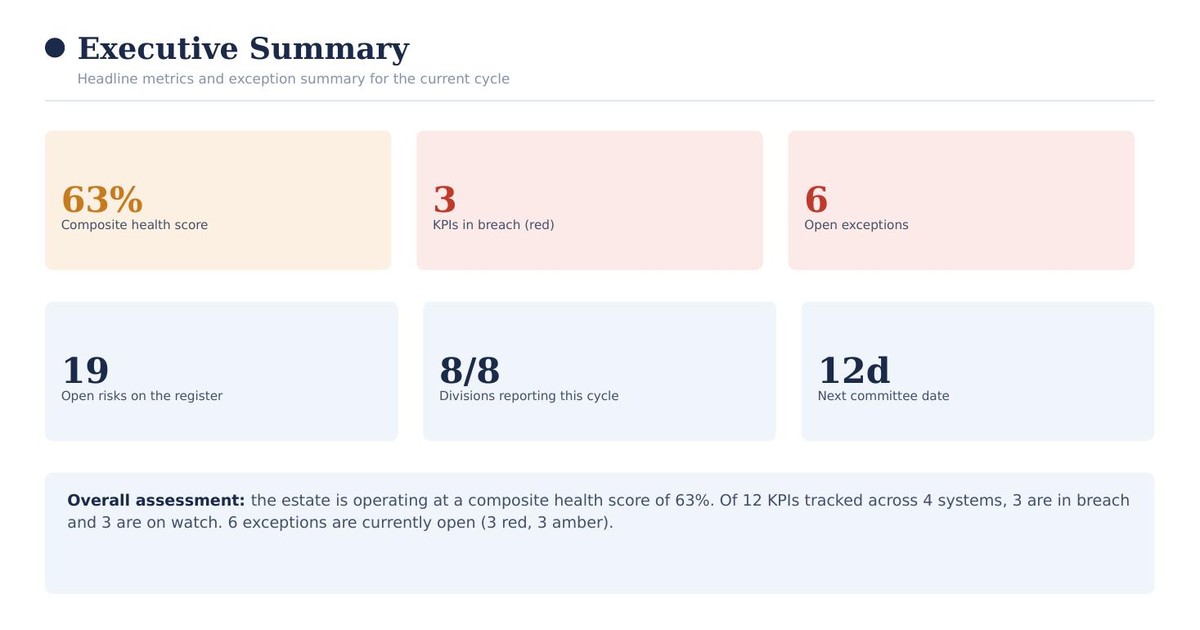
What Should Go In a GRC Board Pack? A Practical Template
A board pack that gets read follows the same shape every cycle: an executive summary, a KPI scorecard, a focus-area section and a reconciled breakdown. The structure that works, and where most packs go wrong.
Building a Stronger Culture of Cyber Resilience
Cyber resilience goes beyond awareness. Learn how organisations can identify, protect, detect, respond, recover and improve through clear accountability, AI guardrails, ISO/IEC 27001 and connected governance.
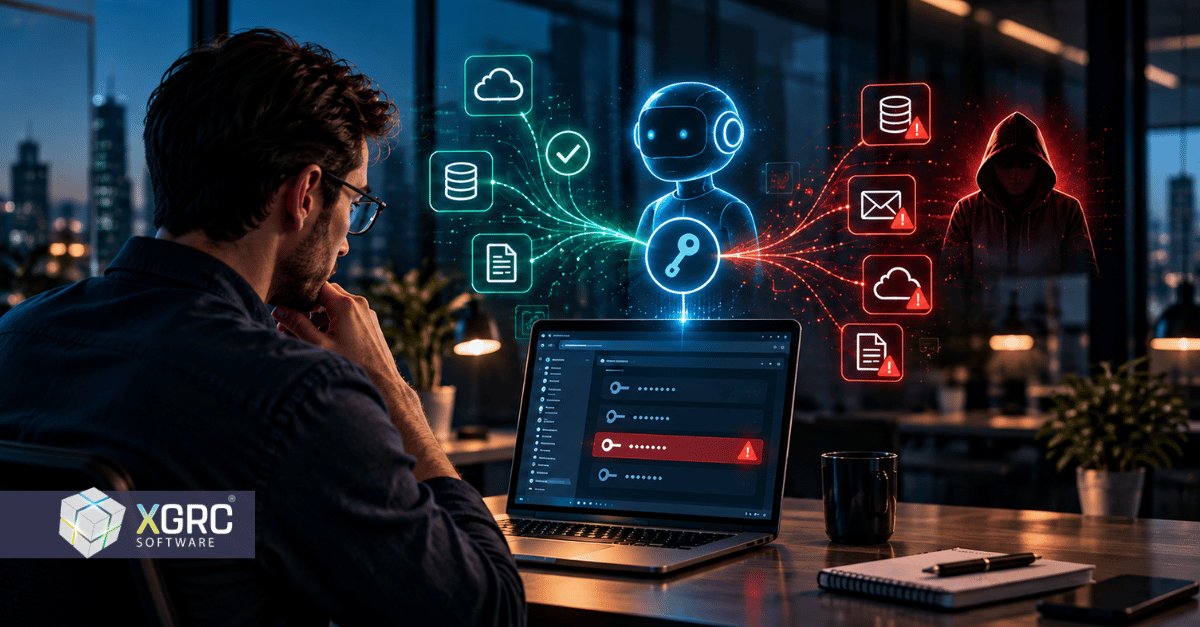
What Happens When an AI Agent Has Your Keys?
AI agents need access, not your real API keys. Learn how stolen keys and manipulated agents differ, how to build an access boundary the agent cannot rewrite, and how Asgard keeps credentials vaulted and scoped.
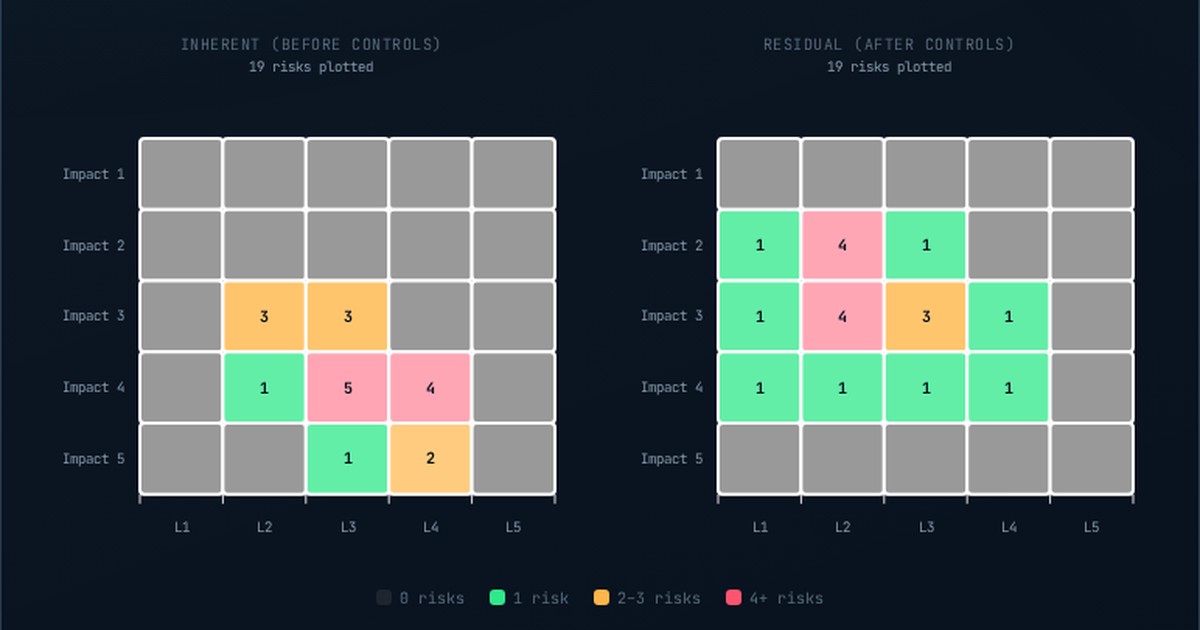
How to Read a Risk Heat Map (5x5 Risk Matrix Explained)
A risk heat map plots likelihood against impact so a committee can see exposure at a glance. What the bands mean, how inherent and residual risk differ on the same map, and the mistakes most people make reading one.
Cybersecurity Awareness Month: From Awareness to Action
Cybersecurity Awareness Month should go beyond reminders. Learn how organisations can turn cyber awareness into action through clear ownership, tested controls, Shadow AI guardrails and leadership visibility.
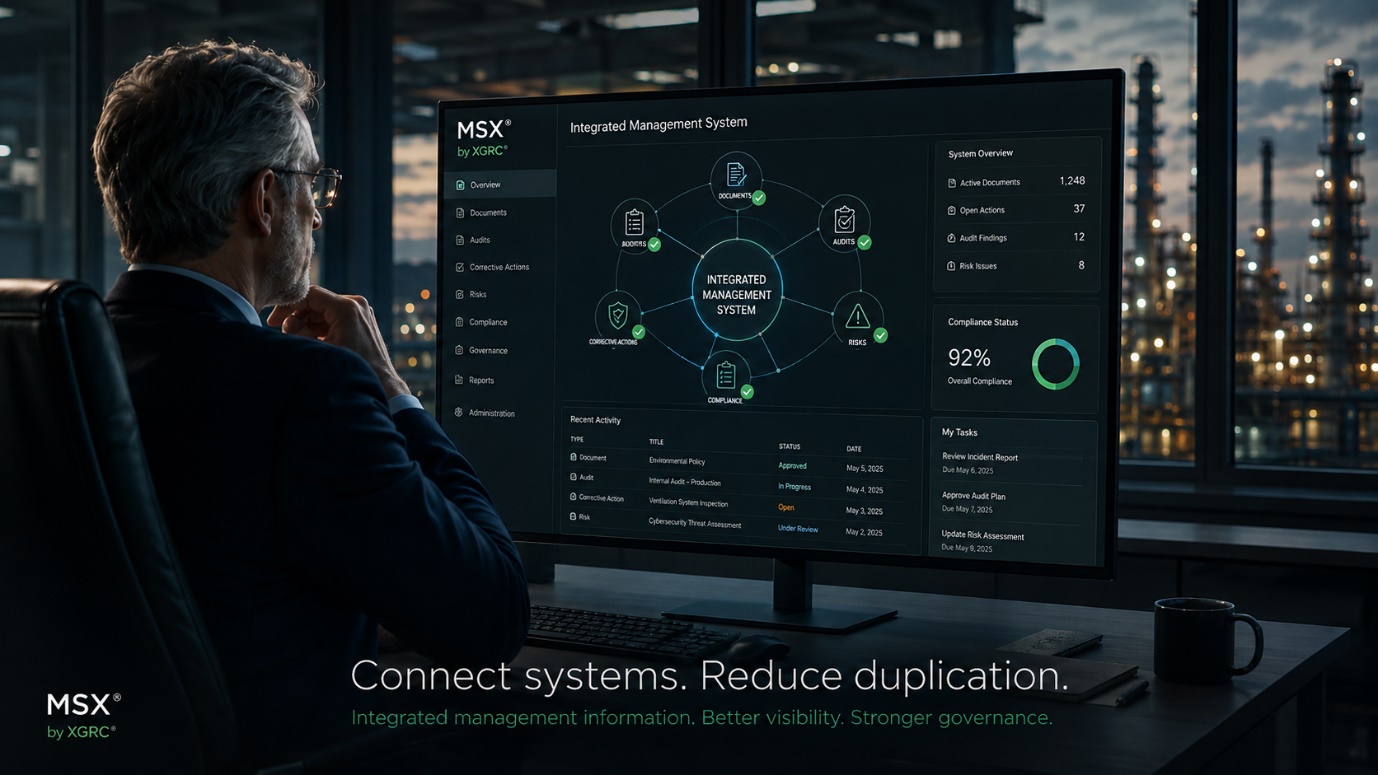
The Hidden Cost of Running Management Systems in Silos
Fragmented management systems don't fail outright, they just get expensive: duplicated documents, repeated audits and manually consolidated reports become ordinary day-to-day work. Here's where that hidden cost comes from, and how integration removes it.
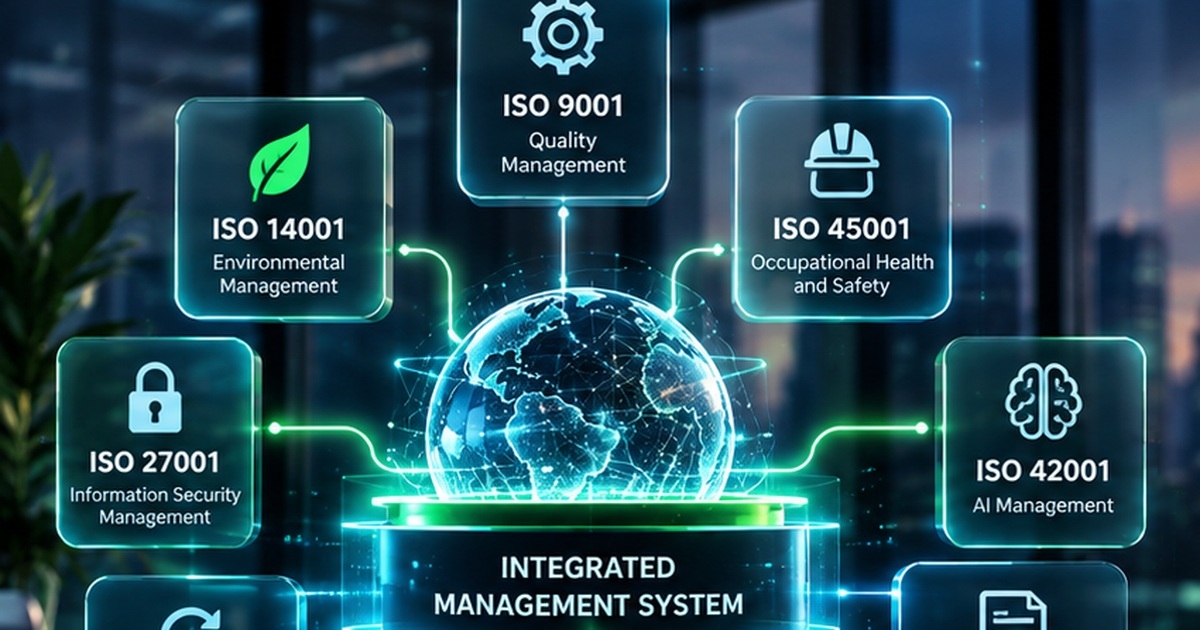
What Is PAS 99? Integrated Management Systems Explained
PAS 99 is the BSI specification for integrating ISO 9001, ISO 14001, ISO 45001, ISO/IEC 27001 and other management systems into one. What it requires, why it matters in 2026 and how to implement it.

What Is Vendor Compliance Management? A South African Guide
Vendor compliance management verifies that suppliers and contractors meet your legal and contractual requirements, and keeps checking. What it covers in South Africa, from B-BBEE and COID to POPIA operators.

What Is SHEQ? Meaning and SHEQ Management Systems Explained
SHEQ stands for safety, health, environment and quality. What it means, how it differs from HSE and SHERQ, and how a SHEQ management system works under South African law and ISO 45001, 14001 and 9001.

How to Consolidate SHEQ Management Across Multiple Sites
When every site runs its own SHEQ system, group leadership cannot see the whole picture. A practical approach to consolidating safety, health, environment and quality onto one system without losing site-level ownership.

Why Incident Reporting Is Critical in SHEQ Management
Incident reporting is the input every other SHEQ process depends on. Why it matters legally and operationally in South Africa, what makes a report useful, and how to turn reports into closed corrective actions.
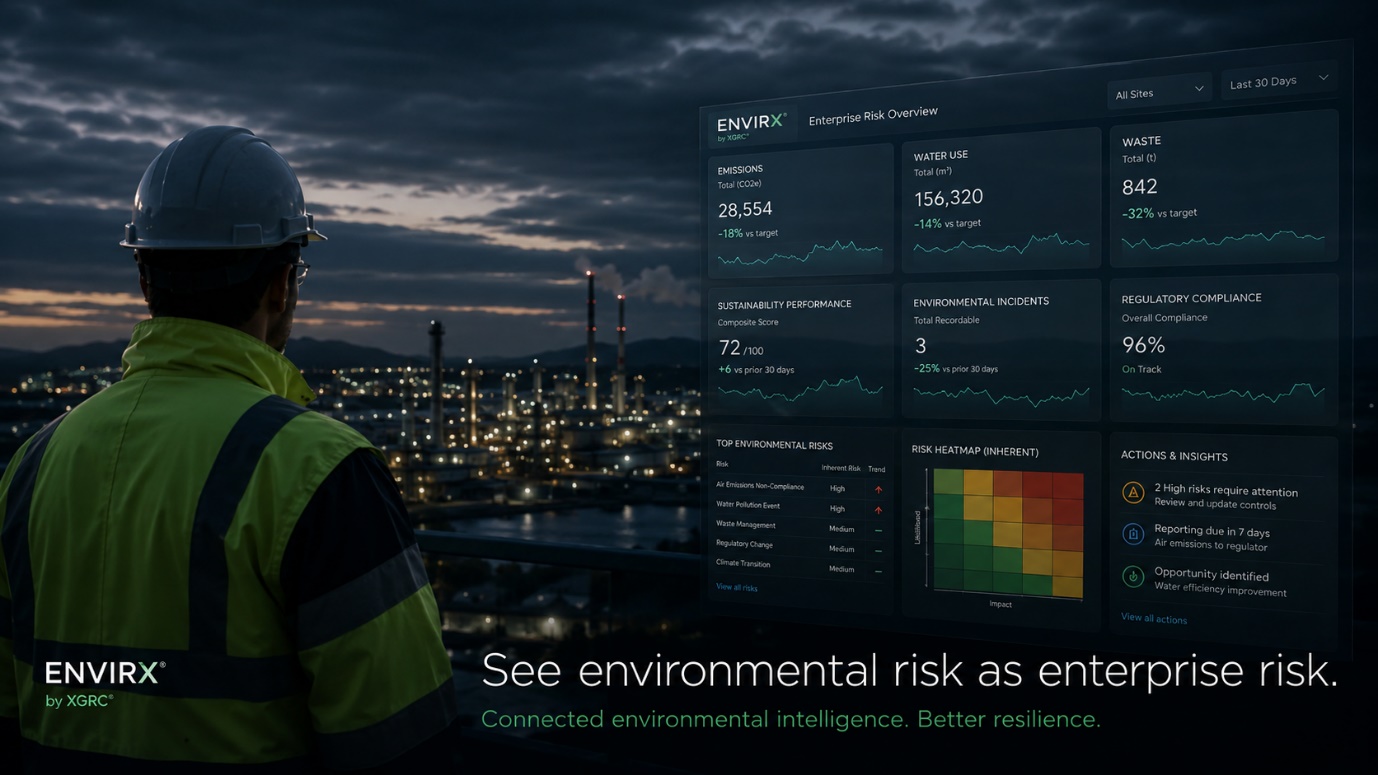
Environmental Risk Is Becoming an Enterprise Risk
Environmental incidents, permits and resource risks increasingly ripple into operations, finance and reputation. Connected environmental governance gives management the visibility to catch these risks before they escalate.
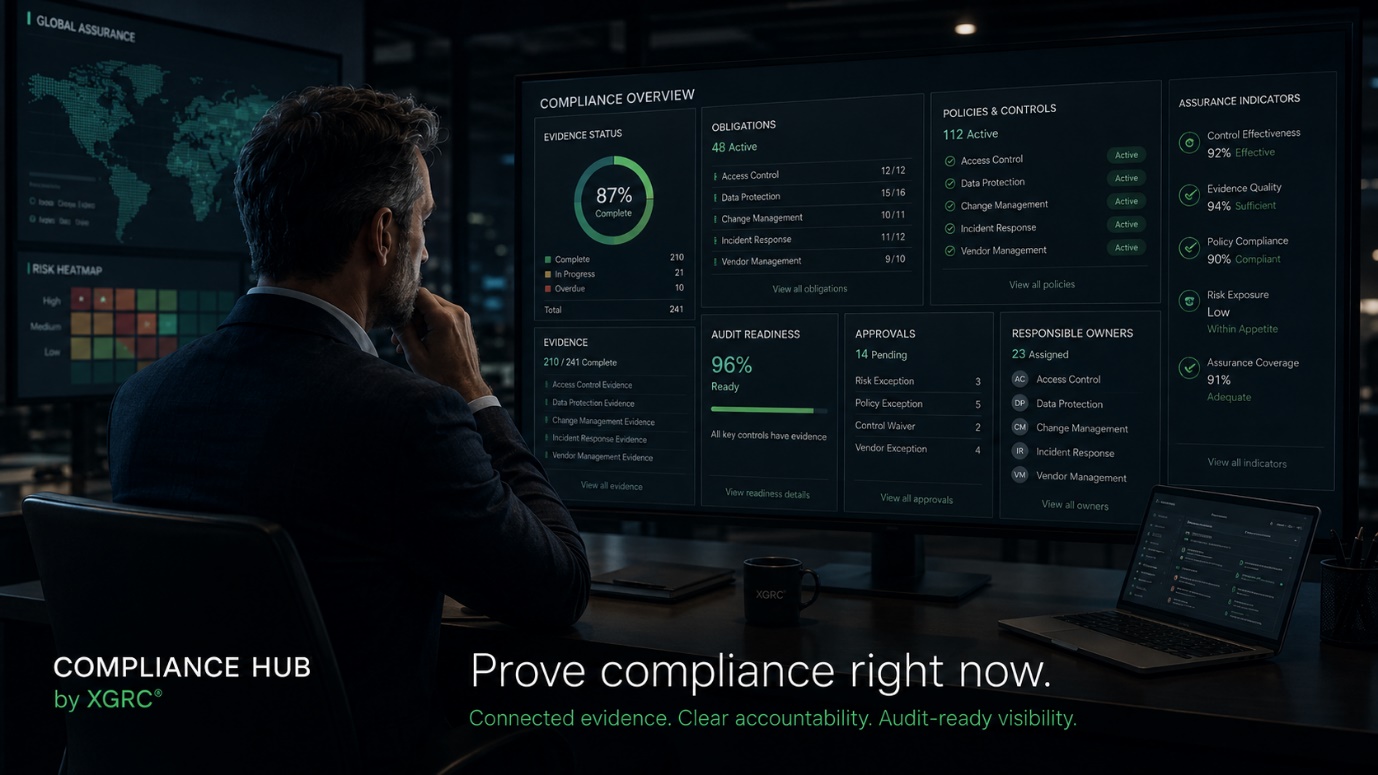
Can Your Organisation Prove It Is Compliant Right Now?
Knowing that compliance activities are happening isn't the same as being able to prove it. Here's why connected compliance management, with centralised evidence and continuous visibility, is becoming essential for audits and oversight.
Why SHEQ Incidents Are Often a Data Problem
Fragmented SHEQ information, scattered across inspections, near misses and corrective action logs, can hide the patterns that signal a serious incident is developing.
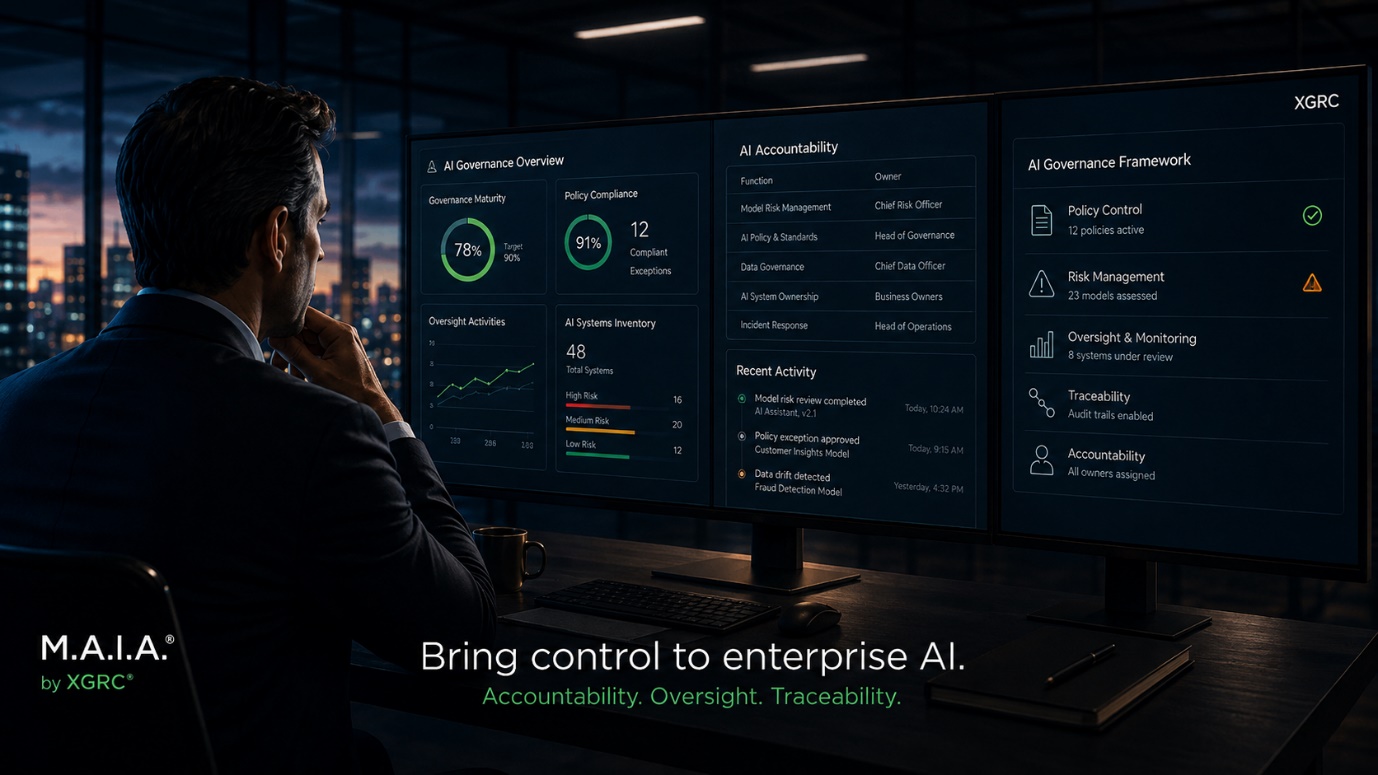
The AI Governance Gap: When Adoption Outpaces Control
AI is spreading through organisations faster than the policies, oversight and audit trails meant to control it. This piece looks at why that gap is the real enterprise AI risk, and what closing it actually requires.
The Future of Compliance: A Strategic Business Asset
Turn compliance into a strategic business asset. Connect obligations, evidence and assurance to investment, operational change and responsible AI with XGRC®.
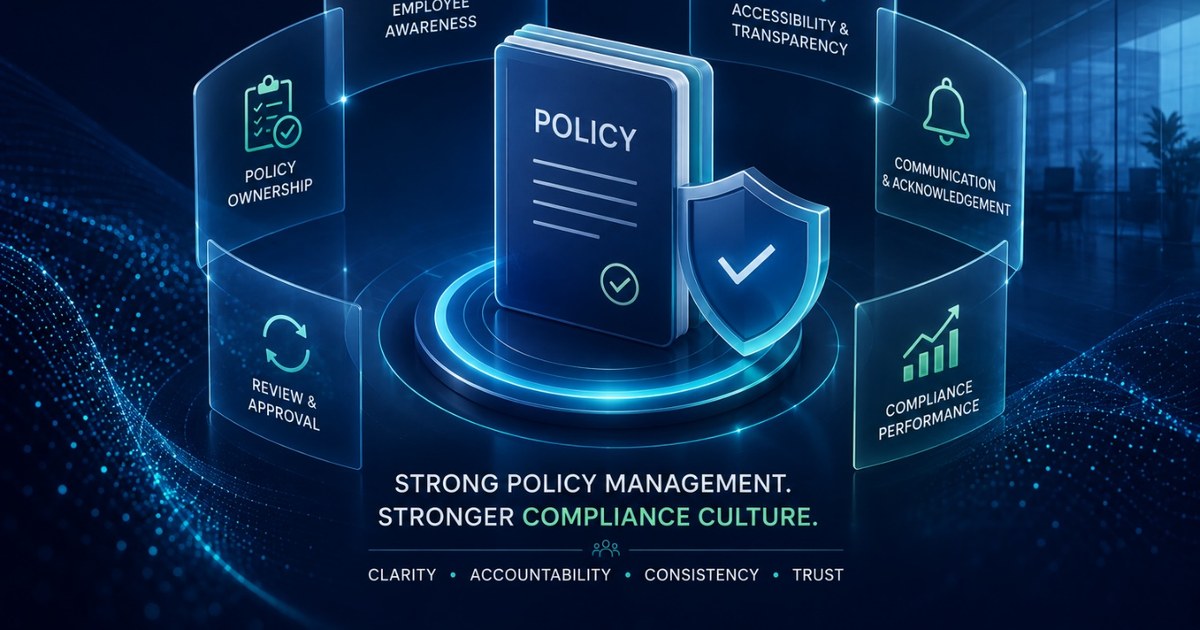
Building a Compliance Culture: Why Policy Alone Isn't Enough
A strong compliance culture is not built by policies alone. What actually makes employees understand, trust, and apply governance expectations.

How Proactive Compliance Reduces Business Risk
Learn how proactive compliance connects obligations, early warnings, controls and accountable action to reduce business risk before problems escalate.

Why Compliance Is Becoming a Competitive Advantage
Learn how evidence-led compliance can strengthen trust, support supplier approval and reduce commercial friction with connected governance from XGRC®.
Why Compliance Visibility Improves Executive Decision-Making
Why compliance visibility is becoming essential for executive decision-making, and how connected governance improves accountability and reduces risk.

What Is Extended Enterprise Risk Management?
A large share of an organisation's risk sits with its suppliers, contractors and partners. Extended enterprise risk management is the discipline of governing that third-party exposure.
ERM vs Traditional Risk Management: What Is the Difference?
Traditional risk management is local and periodic; enterprise risk management is organisation-wide and continuous. What separates them, and why organisations move from one to the other.

ERP vs ERM: What Is the Difference?
ERP and ERM are one letter apart and often confused, but they are different systems: ERP runs the business, ERM governs its risk. What each does, and why organisations run both.

What Is Enterprise Risk Management? A Complete Guide
What enterprise risk management is, how it differs from traditional risk management, the ISO 31000 and COSO frameworks behind it, and how software sustains ERM across the whole organisation.
ERM vs GRC: What Is the Difference?
ERM and GRC are often used interchangeably but are not the same. Enterprise risk management is a discipline focused on risk; GRC is the broader environment it sits inside. How they relate, and which you need.

Digital SHEQ Management: From Scattered Records to One Auditable Platform
Safety, health, environment and quality data still lives in email, spreadsheets and paper forms at many organisations. Moving SHEQ management onto one auditable platform is what turns scattered records into closed actions, prevented incidents and sustained ISO certification.
What Is GRC Software? A Practical Definition
GRC software brings governance, risk management and compliance onto one connected platform, so risks, controls, obligations and evidence are managed together instead of in disconnected spreadsheets and point tools.
The Five Risk Management Process Steps
A structured, repeatable risk management cycle, identify, assess, evaluate treatment, implement and monitor, aligned to ISO 31000, and how to run it on one platform instead of scattered spreadsheets.

What Is Governed AI for GRC?
Generic AI tools create as much governance risk as they solve. Governed AI for GRC is a different category, built for permissions, audit trails, and accountability from the ground up.

What Is ISO/IEC 42001? The New AI Management System Standard
ISO/IEC 42001 is the first international standard for AI management systems. Here's what it covers, who needs it, and how XGRC® is preparing.
Supplier Compliance Software vs Procurement Systems: What's the Difference?
Procurement systems manage purchasing. Supplier compliance software manages risk. Confusing the two leaves compliance gaps that a purchase order was never designed to catch.

Policy Management vs Governance Execution: Why Approved Policies Still Fail
A published policy is not a working control. The gap between policy management and governance execution is where compliance quietly breaks down.

Integrated Assurance vs Internal Audit Software: Beyond the Audit Plan
Internal audit software manages the audit function. Integrated assurance connects every line of defence to the same risk picture, closing the gaps between them.

Why AI Governance Is Becoming a Competitive Advantage
Organisations that implement effective AI governance are not simply reducing risk; they are creating a stronger foundation for sustainable, responsible growth.

ESG Reporting Is No Longer Optional: It's Strategic
Investors, regulators, and customers now expect transparent, data-driven ESG accountability. Companies that wait risk reputational harm, regulatory fines, and competitive disadvantage.

Top 5 Risk Control Strategies for Chemical Plants Using SHEQX®
In the chemical and process-industry landscape, the margin for error is razor-thin. These five control strategies transform how SHEQ teams identify, track, and close risk gaps.

Preparing Your Organisation for ISO 14001:2026
ISO 14001 is evolving. Organisations that start preparing now will be better positioned to meet the updated requirements without disrupting their existing management systems.

Mandatory ESG Reporting in Southern Africa: How Companies Can Stay Ahead
Regulatory ESG disclosure requirements are tightening across Southern Africa. Organisations that wait for final mandates before acting will find themselves behind, and the gap is closing fast.

Solving Compliance Fatigue Through Automation
Compliance fatigue is rising across organisations under increasing regulatory pressure. Automation reduces duplication, improves accuracy, and gives leaders confidence during audits.

The Hidden Cost of Cyber Incidents for CEOs
The direct cost of a cyber incident is visible. The indirect costs, regulatory penalties, customer loss, operational downtime, and reputational damage, are what make the real bill.

How XGRC® GRC Solutions Support Mining Indaba 2026 Objectives
Mining Indaba 2026 makes it clear: governance, sustainability, and risk management are no longer peripheral to mining success; they are central to it.
Navigating South Africa's EHS Regulations: Why Digital Compliance Tools Are Essential
South Africa's EHS legislative landscape is complex, multi-jurisdictional, and constantly updated. Digital compliance tools are how organisations stay on the right side of it.
Cultivating a Risk-Aware Culture: Tackling the People Risk in ERM
Risk frameworks, registers, and tools are essential, but they do not manage risk on their own. People do. Building a risk-aware organisation starts with culture, not software.

Building a Cyber-Aware Culture: Addressing the Human Element of Cyber Risk
Technical controls can only do so much. The human element remains the most significant variable in cyber risk, and it requires a culture of awareness, not just policy.
Navigating ESG Reporting: A Practical Roadmap
The expectations on business to be transparent about ESG performance have never been higher. This article outlines the key hurdles and provides a roadmap to respond proactively.

From Compliance to Zero Harm: Transforming Mine Safety Digitally
Mining remains one of the highest-risk industries globally. Digital mine safety software is now central to moving from regulatory compliance to genuine zero harm culture.

Strengthening HACCP and ISO 22000 Through Digital Food Safety Governance
HACCP and ISO 22000 provide the framework, but without digital oversight food safety governance remains reactive, fragmented, and difficult to demonstrate at audit time.

Simplifying ESG Reporting Through Centralised Environmental Data
Environmental data is scattered across sites, systems, and spreadsheets. Centralising it is the prerequisite for credible, consistent ESG reporting that withstands stakeholder scrutiny.

Streamlining ISO 27001 Compliance Digitally
ISO 27001 compliance is achievable without the administrative chaos, if the right governance infrastructure is in place from the outset.

Double Materiality in ESG: What Organisations Need to Know
Double materiality requires assessing both how sustainability issues affect the business and how the business affects sustainability. Most organisations are not prepared for the second half.

Environmental Compliance Software for Regulatory Management
Environmental regulation is not static. Organisations that rely on manual compliance tracking will always be playing catch-up with a legislative landscape that never stops moving.
Integrated Management System Software for Modern Compliance
Multiple ISO standards, multiple management systems, multiple obligations. Integration is how leading organisations eliminate duplication and create a single, auditable picture of compliance.
ISO 31000 vs COSO: Key ERM Framework Differences
ISO 31000 and COSO ERM are both widely adopted risk frameworks, but they are designed with different emphases. Understanding the distinction helps organisations choose the right foundation.
What Is SHEQ Software? A Complete Guide
SHEQ management has evolved well beyond paper-based registers and manual inspections. This guide explains what modern SHEQ software does and why it has become essential for compliance-driven organisations.
ERM Software vs Traditional Risk Tools: Why Spreadsheets Create Risk
Spreadsheet-based risk registers create false confidence. Enterprise risk management software provides the visibility, accountability, and real-time monitoring that traditional tools cannot.
GRC vs Risk Management Software: Why the Difference Matters
GRC platforms and risk management software are often conflated. The difference matters, because choosing the wrong category of solution creates the very gaps it was supposed to close.
The Cost of Fragmented Compliance: Why Visibility Matters More Than Ever
When compliance activities are scattered across disconnected systems, visibility disappears, and what leadership cannot see, they cannot govern.

ESG Reporting Is Evolving: Why Spreadsheets Are No Longer Enough
ESG reporting has moved into the mainstream. Organisations still relying on spreadsheets are discovering they were never built to support the governance rigour now required.