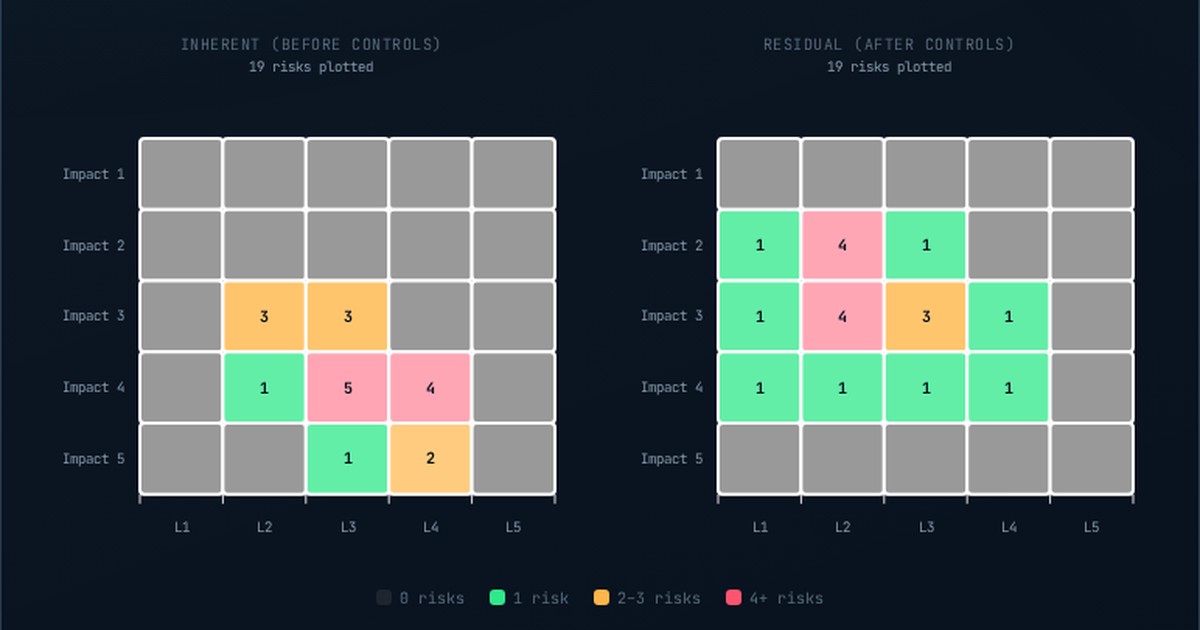
A critical contractor's document is approaching expiry. A system change introduces broader access. A recurring inspection finding remains open because nobody has decided what happens next. Each situation presents an opportunity to act, and the opportunity is lost when a warning remains in a spreadsheet, an inbox or a report without reaching someone who can change the outcome.
Proactive compliance is the discipline of identifying those conditions, assessing their significance and acting before a requirement is missed or an exposure grows. It is not a promise to predict every incident. A warning reduces risk only when it leads to an effective decision or control.
Move From a Calendar to an Operating Process
A calendar can tell the organisation when a review is due. It cannot, by itself, establish whether the requirement still fits the activity, whether the control works or whether a change needs approval.
ISO 37301 treats compliance as a management system that is evaluated and improved. ISO 31000 provides a complementary process for identifying, assessing, treating and monitoring risk, set out step by step in the five risk management process steps. Together, these approaches support ongoing management rather than a rush to prepare for an annual audit.
Start with a material obligation and the activity it affects. Identify the event that could cause non-compliance, the control intended to address it and the evidence needed to judge performance. Then establish what triggers action. A missed review, an expanded service, a new supplier or a control failure may each require a different response. A date-based reminder is useful, but it is only one kind of trigger.
Distinguish Prevention, Detection and Correction
Use three questions when designing a process. What prevents the problem? Examples include restricting access to approved operations, checking authorisation before work begins and requiring approval before a material change is released. What reveals a problem or a weakening control? Examples include reconciling access against approved roles, reviewing overdue inspections and checking for repeated exceptions. What limits harm and stops recurrence? Examples include withdrawing access, suspending affected work, investigating the cause and verifying the corrective action.
A report produced after a breach is not the same as a control that prevents the breach. Yet detective and corrective controls still matter, because prevention can fail. Assess the complete arrangement rather than choosing a single control and assuming the risk is covered. In health and safety, HSE guidance calls for both preventive information and incident data, together with reviews of control effectiveness. That principle is equally useful when designing a broader compliance dashboard.
An Illustrative Supplier Change
Imagine a supplier approved to provide a limited support service. It later proposes remote access to production systems to speed up fault resolution. This is an illustrative scenario, not a reported incident. The commercial relationship has not changed its name, but the exposure has changed substantially, and simply renewing the supplier's annual questionnaire would miss the new access decision.
A proactive process brings the proposed change to the service owner, security team and relevant risk owner before access is enabled. They determine the permitted systems and actions, the approval conditions, the monitoring required and how access will end. The outcome might be a restricted connection, additional safeguards or a decision not to proceed. The important point is timing: the control decision precedes the access, rather than following an incident.
NIST's technology supply-chain guidance similarly links supplier requirements to criticality and potential impact, with monitoring across the relationship. An initial assessment should not be treated as permanent approval for every later use. The XGRC® Compliance Hub supports that ongoing view of suppliers and contractors, with structured onboarding, document expiry tracking and risk scoring.
Give Each Signal an Owner and a Response
For every high-priority warning, define who receives it, who decides, what happens while the matter is unresolved and when escalation is required. A useful operating record connects the affected requirement, risk, control, responsible person, due date and evidence. It should also distinguish a proposed action from an implemented control: logging a remediation task does not make the exposure smaller until the relevant change takes effect.
The IIA's Three Lines Model places risk management within management's responsibilities. Specialist compliance and risk roles provide support and challenge, while internal audit provides independent assurance. Escalating an issue to compliance does not transfer the operational owner's responsibility.
Where an internal exception is permitted, make its scope, conditions and expiry explicit. Do not use an exception record as a substitute for meeting a mandatory requirement, and make sure uncertainty about what is permitted reaches the appropriate specialist before work proceeds.
Prioritise the Consequence, Not the Number of Alerts
A dashboard with hundreds of overdue items can conceal the issue that matters most. Assess warnings in context: which process is affected, what could happen, how quickly the exposure could develop and what other controls remain effective. A single failed access restriction on a critical system may require more urgent attention than many low-impact administrative tasks. This is the same consequence-led thinking that underpins enterprise risk management.
Use leading indicators to examine whether important controls are being maintained, such as overdue critical tests, unreviewed access changes and repeated temporary exceptions. Pair them with outcomes such as incidents, service interruptions or repeated non-conformances. These are suggested measures, not universal thresholds.
Interpret movement carefully. More reported near misses could reflect improved reporting, greater exposure or both. Fewer alerts could reflect better controls or a monitoring failure. Before declaring success, check the source data and what changed in the process.
AI-Agent Access Makes Prevention Especially Concrete
An AI agent connected to business tools creates an access decision, not just a productivity decision. OWASP identifies excessive functionality, permissions and autonomy as causes of excessive agency. A manipulated or mistaken agent may misuse legitimate access without first stealing a credential.
This is a specific area where Asgard, the XGRC® AI agents platform, fits. Upstream credentials are kept in an encrypted Vault rather than handed to the agent. Each agent uses a scoped Asgard key mapped to approved grants, and tool calls pass through Bifröst, where Heimdall filters apply allow and deny rules, redaction and PII removal. Guardrails, central revocation and action logs add further safeguards. For example, an agent approved to read operational records need not receive permission to amend them merely because the same application supports both actions.
The limits still matter. A scoped key remains sensitive, authorised actions can still be misused, and access outside the brokered route needs its own controls. Asgard is relevant to controlled AI-agent access; it is not a substitute for the organisation's wider compliance programme. Asgard is available on XGRC® Enterprise, and you can contact XGRC® to learn more about its controlled access model.
Test the Control Before Depending on It
A control description explains what should happen. A test examines what does happen. For a critical workflow, try an authorised action and a prohibited one under controlled conditions. Check whether a revoked grant stops access, whether an overdue approval reaches the right person and whether an escalation is visible to someone with authority to respond.
Keep the test result linked to the control and its scope. A successful test of one integration does not establish that every integration behaves the same way. If a test fails, record the exposure, interim treatment, accountable owner and retest requirement. HSE's guidance also calls for periodic audits of management structures and risk controls, and the practical lesson is to examine operation, not just the existence of a procedure. Closing an action is an administrative event. Verifying the fix is a control decision.
How XGRC® Connects Early Warnings to Accountable Work
XGRC®'s risk management capabilities connect risk registers with controls, mitigation actions and assurance information. This supports a consistent view of exposure across business units rather than disconnected lists with different meanings, and XGRC® Enterprise Risk Management extends that view to enterprise, operational and project risk on the same auditable platform.
Its internal controls capabilities support named ownership, risk-based testing schedules, deficiency tracking and verified remediation. Teams can connect a failed test to the affected control and risk, then track the work required to address it. Applied to the supplier example, that means retaining the assessment, access conditions, test results and follow-up actions against the relevant risk and owners, and revisiting them when the service changes.
The distinction between governance and enforcement remains important. XGRC® supports the management process and its evidence. The relevant operational, identity or security system must enforce the actual access restriction, work authorisation or technical control.
Make the Next Review a Prevention Exercise
Select one critical process and trace the last material change or exception. Ask whether the organisation identified the exposure before it took effect, assigned the right decision-maker, implemented the response and verified the result. Use what you find to improve that workflow. A practical starting point is one requirement, one owner, one tested control and one reliable escalation route. Expand only when the process works, rather than creating a large register that nobody maintains.
Measure the time from warning to decision, the age of unresolved high-priority deficiencies and the recurrence of previously closed issues. These measures help test whether attention is turning into risk reduction, not merely more reporting.
Act While There Is Still Time to Change the Outcome
Proactive compliance is not about producing more warnings. It is about ensuring that important warnings reach someone who can act, with the authority and evidence needed to make a sound decision. The goal is not to discover yesterday's problem more efficiently, but to make a better decision while the outcome can still be changed. Speak to an XGRC® specialist about connecting compliance risks, control testing and corrective actions across your organisation.