Governance, risk and compliance (GRC) software is a category of enterprise software that brings an organisation's governance activities, risk management and regulatory compliance onto one connected platform — so policies, risks, controls, obligations, audits and the evidence behind them are managed together rather than in separate, disconnected tools.
What GRC Software Actually Does
At its core, GRC software replaces the spreadsheets, email threads and standalone point tools that most organisations accumulate over time. Instead of a risk register in one place, an audit tracker in another, and a compliance obligations list in a third, a GRC platform holds them on a single data foundation where each record can reference the others. A control can be linked to the risk it mitigates, the obligation it satisfies, the audit that tested it, and the corrective action raised when it failed.
The three disciplines in the GRC grouping are usually owned by different teams but depend on the same underlying information:
- Governance — the decision-making structures, policies and accountability that direct how an organisation operates.
- Risk — identifying, assessing, treating and monitoring the risks that could affect objectives.
- Compliance — conforming with external regulations and internal standards, and being able to prove it.
Why Organisations Move to GRC Software
The move is usually triggered by a specific failure. An external audit surfaces a gap that had been invisible between certification cycles. A board member asks a residual-risk question that takes days to answer because the data sits in four systems. The same information is entered three times for three standards and never reconciled. GRC software addresses the root cause common to all of these: fragmentation. When governance, risk and compliance data live apart, no one can see the whole picture, and evidence is assembled reactively rather than maintained continuously.
Integrated GRC vs Point Tools
A single-purpose tool — a standalone risk register or an audit tracker — solves one discipline in isolation. The limitation appears at the seams: a risk recorded in one tool has no live link to the control that treats it or the audit that tests it, so those relationships are rebuilt by hand every reporting cycle. An integrated GRC platform keeps the relationships intact on one data foundation, which is what makes continuous assurance and real-time reporting possible rather than a quarterly scramble.
GRC Software and XGRC®
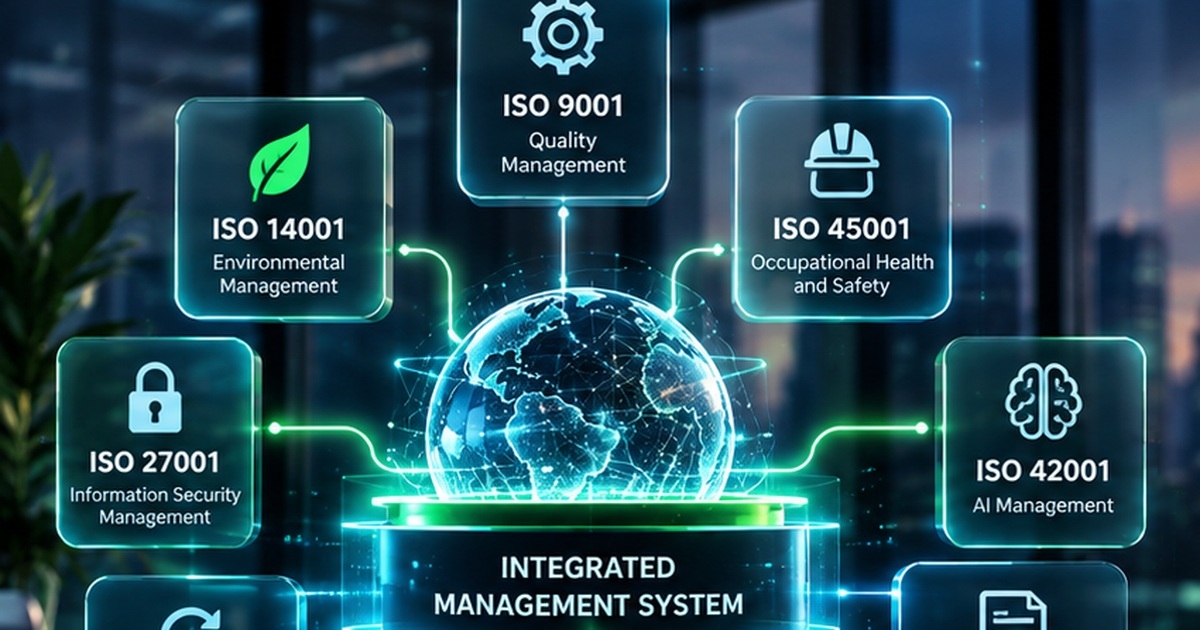
XGRC® Software is a GRC software platform built around this connected model. Specialist solutions, including Enterprise Risk Management aligned to ISO 31000 and COSO, Integrated Assurance, SHEQX® for safety, health, environment and quality, and MSXCyber® for ISO 27001-aligned information security, run on one secure, auditable data foundation. Because they share that foundation, risks, controls, obligations and evidence stay linked across disciplines instead of being duplicated across systems.
When Does an Organisation Need GRC Software?
The need typically surfaces once manual methods stop scaling: when compliance obligations span multiple regulations and standards, when audit evidence is assembled from scattered sources, or when leadership needs one defensible view of risk and compliance across business units. At that point a spreadsheet is no longer a system of record — it is a source of risk in its own right.