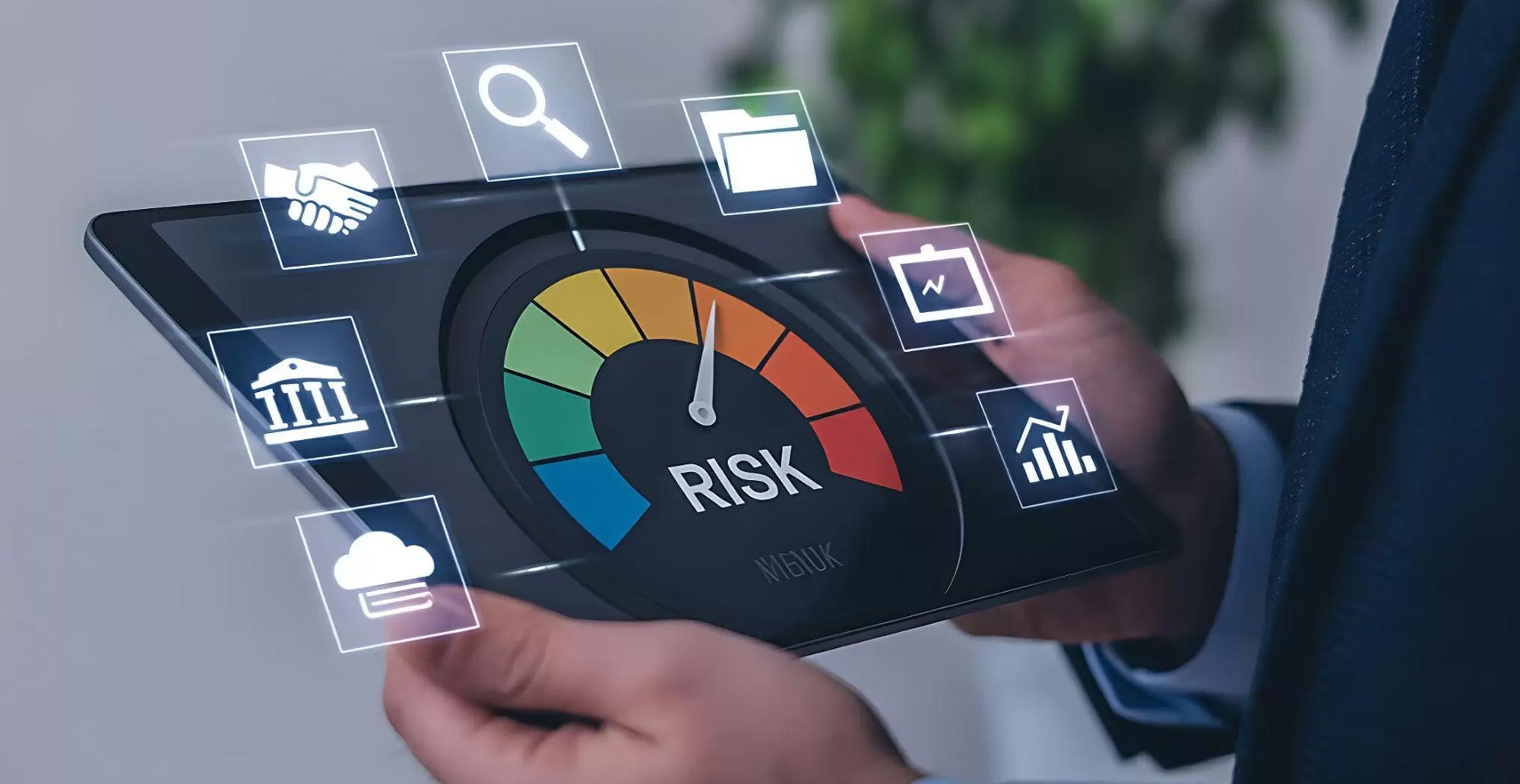

Every organisation carries risk. The question is whether it manages that risk in one connected view or in a scatter of disconnected registers, spreadsheets and departmental silos. Enterprise risk management is the discipline of doing the former: looking at risk across the whole organisation, as a portfolio, rather than one department or project at a time.
What Is Enterprise Risk Management?
Enterprise risk management (ERM) is a structured, organisation-wide approach to identifying, assessing, treating and monitoring the risks that could affect an organisation's objectives. Instead of managing risks in isolation, ERM connects them to the controls that treat them, the risk appetite the board has set, and the assurance activities that test whether those controls work. The result is a single, current view of risk that leadership can actually act on.
Enterprise Risk Management vs Traditional Risk Management
Traditional risk management tends to be local and periodic: each department keeps its own register, risks are reviewed once a year, and residual risk is rarely re-assessed. It answers the question "what could go wrong here?". Enterprise risk management answers a broader question: "what is our total exposure, and is it within the level we have agreed to accept?". The difference is scope and connection. ERM aggregates risk across departments and projects, links each risk to its controls and owners, and keeps the picture live. This distinction is explored in full in ERM vs traditional risk management; for the underlying cycle, see the five risk management process steps, and for how it plays out in tooling, ERM software versus traditional risk tools.
The Enterprise Risk Management Framework
ERM is usually built on an established framework. The two most widely used are ISO 31000, the international standard for risk management, and the COSO ERM framework, which links risk more explicitly to strategy and performance. ISO 31000 frames risk management as a continuous cycle rather than a one-off exercise; COSO ERM emphasises integrating risk into strategic decision-making. Most organisations draw on both. The differences between them are set out in ISO 31000 vs COSO.
Core Components of Enterprise Risk Management
A working ERM programme brings several elements onto one foundation:
- A risk register that is maintained continuously, not rebuilt annually
- Risk appetite thresholds set by the board, with a mechanism to detect and escalate breaches
- Key risk indicators (KRIs) tracked alongside the risks they monitor, so early warning signals are noticed
- Controls linked to the specific risks they treat, with clear owners
- Corrective actions raised, assigned and tracked to closure
- Assurance and audit activity aligned to the risk register, so high-risk areas are actually tested
Why Enterprise Risk Management Matters
Risk that is managed in silos produces impressive registers that are outdated before they reach the board, appetite thresholds that operational decisions quietly ignore, and audit plans that bear no relationship to where the real exposure sits. ERM closes those gaps. It gives decision-makers one defensible view of exposure, connects risk to the controls and assurance meant to manage it, and turns risk management from an annual compliance exercise into an ongoing part of how the organisation runs.
How Software Supports Enterprise Risk Management
At scale, ERM is difficult to sustain in spreadsheets. Enterprise risk management software provides the shared data foundation the discipline needs: a live risk register, risk appetite monitoring, KRIs tied to their risks, board-level dashboards, and corrective action tracking, all aligned to ISO 31000 and COSO. XGRC® Enterprise Risk Management delivers this within the wider XGRC® platform, so enterprise, operational and project risk are managed on the same auditable system used across compliance and assurance.
Enterprise Risk Management and the Wider GRC Picture
ERM does not operate alone. It sits within an organisation's broader governance, risk and compliance environment, sharing data with compliance obligations, audits and controls. Understanding where ERM ends and GRC begins is a common point of confusion, addressed in ERM vs GRC. Managed together on one platform, risk stops being a standalone register and becomes part of a connected governance picture.